Public Launch Edition · 2026

Arctic Fox Pipeline

North Slope gas to the Interior — cheaper electricity, a stronger power grid, and lower heating costs for Alaskans.

A 484-mile, 14-inch in-state natural gas and NGL pipeline from Prudhoe Bay to Fairbanks. Privately financed. No state subsidy required.

At a Glance — General Overview

The project at a glance

A right-sized, in-state pipeline bringing North Slope natural gas and propane to the Fairbanks / North Pole / Eielson load center. It attacks Interior energy cost on three fronts at once: electricity (moving power generation off naphtha and diesel), the grid (firming Interior generation and feeding the Northern Intertie), and heat (lower rates for gas customers, propane for off-grid homes).

484 mi
Prudhoe Bay to Fairbanks (Fox)
14″ pipe
Fit-for-purpose, not export-scale
19 Bcf/yr
Base Interior demand served (scales up)
230 kV
Northern Intertie — send power south
  • A 484-mile, 14-inch in-state natural gas and NGL pipeline — Prudhoe Bay → Livengood → Fox.
  • Sized to known Interior load (~19 Bcf/yr base), scalable through the 2026 Non-Binding Open Season.
  • Cheaper, cleaner power: fuels Interior generation with gas instead of naphtha and diesel — the fuels driving GVEA electric rates up.
  • Grid expansion: gas at Fox immediately enables GVEA to convert its existing naphtha/diesel generation to natural gas — and to double the North Pole LM6000 capacity, as that plant was originally designed for. On-site generation can feed the 230-kV Northern Intertie and send surplus electrons south to relieve the Cook Inlet power shortage.
  • Lower heating bills for homes and businesses: lower rates for existing residential and commercial gas customers, plus propane from the NGL stream for rural, off-grid homes still burning heating oil.
  • Carries dry gas plus propane and other NGLs — the same fuels Interior Alaskans already buy.
  • Privately financed. No state subsidy required.
  • Roadside corridor along the Dalton / Elliott / Richardson Highways — accessible and buildable.
  • Targets first gas around 2030 — years, not decades.
The Gap

Alaska produces gas at world scale. Interior Alaskans still pay some of the highest electricity and heating costs in the country — and burn diesel to keep the lights on. Arctic Fox closes that gap.

Have a question about your community?
Tell us who you are and what you'd like to know — utility, business, borough, or resident. Send a specific inquiry →
The Problem & The Savings

Why Interior energy costs so much — and how Arctic Fox changes it

Interior Alaska sits 500 miles from one of North America's largest gas reserves, yet keeps the lights on by burning naphtha and diesel and heats homes with expensive fuel oil. The problem isn't just the heating bill — it's the electric bill and the grid behind it. Arctic Fox changes the fuel supply, not just the sticker price.

  • Interior homes and utilities burn naphtha and #1 heating oil / diesel for power and heat — Interior heating oil averaged $6.81/gal in the January 2026 state survey. Electricity runs ~32.9¢/kWh.
  • Interior Gas Utility (IGU) delivers gas trucked as LNG down the Dalton Highway from the North Slope — a real improvement, but the long haul keeps delivered cost high.
  • GVEA generates power on a naphtha/diesel mix — averaging on the order of 250,000 gallons/day across the year and peaking near 500,000 gallons/day in deep cold. Every +$1/gal on that fuel flows straight through the fuel-cost adjustment onto electric bills. Piped gas is the cheaper, more stable generation fuel.
  • Arctic Fox delivers dry gas for power and heat and propane from the NGL stream — letting Interior households move off costly diesel fuel oil and onto affordable piped gas and propane.
  • The savings come from the supply, not a subsidy: North Slope molecules delivered by pipe instead of by truck.
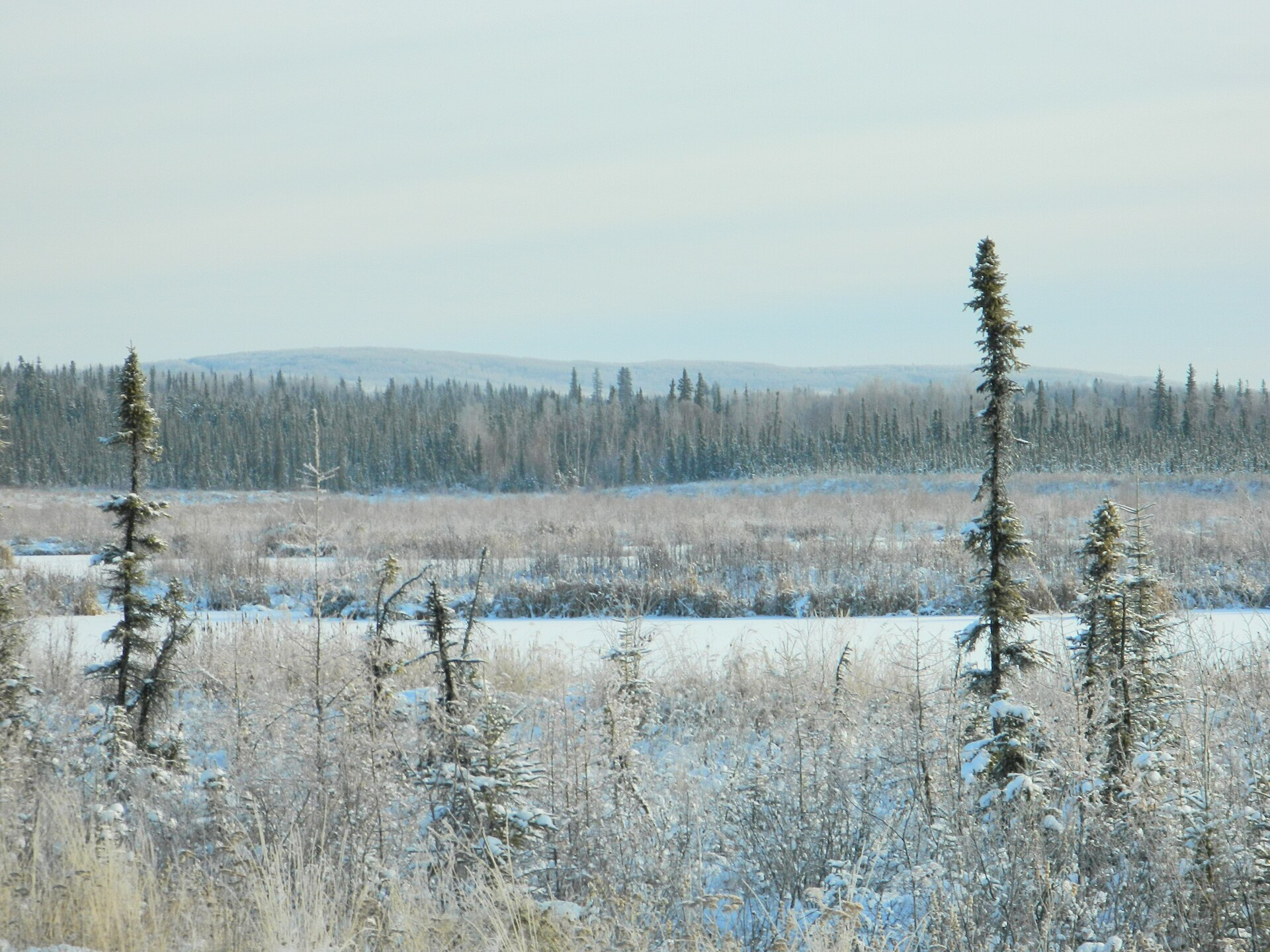
Goldstream Valley, Fairbanks in winter
Goldstream Valley, Fairbanks — Interior winters drive some of the highest per-capita heating demand in the U.S.
The Delivered-Cost Picture

What Interior Alaskans pay to stay warm

Thermal-equivalent comparison — the honest way to compare fuels is dollars per unit of usable heat (per MMBtu), because a gallon of diesel, a gallon of propane, and a thousand cubic feet of gas each carry different energy. Interior homes today burn #1 heating oil at ~$6.81/gal; Arctic Fox moves them onto piped gas and NGL propane at a fraction of that.

Fuel (as used in the Interior)Recent price≈ Thermal-equivalentSource basis
Electricity — GVEA residential (all-in)~32.9¢/kWhFuel/COPA up to ~20.65¢/kWh (summer 2026)GVEA / Alaska Beacon, 2026
#1 heating oil / diesel fuel oil (what most off-grid Interior homes burn today)~$6.81/gal~$49/MMBtuAlaska DCCED Fuel Price Report, Jan 2026 (Interior avg)
IGU piped / LNG-trucked gas (delivered)~$24.76/Mcf~$24/MMBtuIGU Schedule C reference tariff
Arctic Fox delivered gas~$5.54/Mcf~$5.4/MMBtuFPC screening cost of service (v12)
Arctic Fox propane (NGL stream — the fuel we move off-grid homes onto)well below ~$3.85/gala fraction of $6.81/gal heating oilFPC NGL stream vs. delivered-propane/heating-oil baseline

Prices are recent Interior Alaska references, not spot quotes, and move with markets. The point isn't a single number — it's the structural gap: piped North Slope gas lands at a fraction of what trucked LNG and diesel fuel oil cost to deliver into the Fairbanks bowl.
Electric
Off diesel & naphtha
Gas-fired generation stabilizes rates against a fuel bill that runs 250k–500k gal/day of naphtha/diesel.
Grid
Firm + expand + export
On-site generation at Fox feeds the 230-kV Northern Intertie and can send power south to Cook Inlet.
Heat
Lower rates + propane
Lower rates for residential and commercial gas customers, plus ~1,802 bpd of propane/NGLs for off-grid homes on heating oil.
Are you a utility, borough, or large fuel buyer?
We can run a delivered-cost comparison for your specific load. Request a tailored estimate →
Technical — Engineering Basis

How the system is built

The line is 14″ OD API 5L X-65 steel, Charpy-tested for Arctic low-temperature toughness. Technical terms and acronyms are defined on the Definitions tab.

Primary line
14″ OD, API 5L X-65
Wall thickness
0.281–0.438″ by segment (0.312″ representative)
Total length
484.18 mi
Route
Prudhoe Bay → Livengood → Fox
Segment split
418.2 mi trunk + 65.98 mi stem
Base throughput
~19 Bcf/yr
Segment split
Trunk 418.2 mi + stem 65.98 mi
Volume-based ladder
14/16/18″ → 44.1 / 63.3 / 87.6 Bcf/yr
Livengood junction
Flanged tie-in for future south-spur piping
Fox power block
On-site generation, scalable 25 / 50 / 100 MW and beyond as load warrants
Capacity ceiling
~44.1 Bcf/yr (14″ base, w/ compression)
Wet feed at Prudhoe
~20.18 Bcf/yr
Total steel
~62,895 net tons
Gas service
Wet, sweet ANS gas · ~12.07% CO₂
Marketable liquids
~1,802 bpd C3+ / NGLs
Corridor
Roadside — Dalton / Elliott Hwy
  • Fit-for-purpose sizing. 14″ serves ~19 Bcf/yr base with 2.3× headroom to ~44.1 Bcf/yr — added later via compression horsepower, not by over-building steel now.
  • Capacity tolerance follows volume. Trunk and stem are floored at 14″ for the base case; the model steps each segment up the ladder (16″ → 63.3 Bcf/yr, 18″ → 87.6 Bcf/yr) automatically as Open-Season nominations grow. Trunk sizes off total system load, stem off Fairbanks load.
  • Flanged at Livengood. The Livengood junction is built with a flanged tie-in so a future spur can pipe product south — keeping the option open without committing steel now.
  • Power-generation expansion at Fox. The design accommodates an on-site gas-fired generation block that scales from 25/50/100 MW upward as load warrants — firming Interior power and feeding the 230-kV Northern Intertie. Fuel gas at Fox also lets GVEA convert its existing naphtha/diesel units to gas and double its LM6000 capacity, as originally designed.
  • Cold-climate metallurgy. Charpy V-notch to −20 °C route minimum, −45 °C for Brooks Range / Atigun crossings.
  • Wet-gas corrosion allowance. Wall spec carries a corrosion allowance for the CO₂-driven sweet-corrosion regime of untreated ANS gas.
Right-sized, not export-scale

Arctic Fox is deliberately not a large-diameter interstate line. It's a disciplined in-state system sized to real Interior demand — with room to grow as nominations come in.

Technical reviewer or potential offtaker?
We can share the hydraulic basis, milepost matrix, and gas assay under the NBOS package. Request the technical package →
Economics

The money, in plain terms

Privately financed, cost-of-service priced, no state subsidy. The delivered rate is built transparently from transport plus commodity plus royalty. The project is budgeted to stay under $1 billion even in conservative scenarios, with a screening target of $683.1M — discipline and headroom built in, not optimistic precision.

Total project cost (target)
~$683.1M (screening)
Budget ceiling
held under $1B in conservative scenarios
Delivered bundled rate
~$5.54/Mcf
— Cost of service (transport)
$2.29/Mcf
— Feed / commodity transfer
$2.71/Mcf
— Royalty component
$0.54/Mcf
vs Interior reference (IGU Sch C)
~$24.76/Mcf
Delivered-cost reduction
~78% lower
Marketable liquids revenue stream
~1,802 bpd C3+
  • No state subsidy. Privately developed by Fairbanks Pipeline Company, Inc., with debt and equity financing — not appropriations.
  • Cost-of-service transparency. Quarterly disclosure of cost drivers to all customers.
  • Single motivated seller. Hilcorp is the primary North Slope gas counterparty post-BP-2020 divestiture.
  • Subscribed > base case. NBOS indicative interest already exceeds the base design throughput (see NBOS tab).
Built to price honestly

The delivered number isn't a marketing figure — it's a cost-of-service build-up (transport + commodity + royalty) that a regulator can audit line by line.

Investor or lender?
Capital structure, IRR basis, and the offering materials are available to qualified parties. Request investor materials →
Route & Timeline

Prudhoe Bay to Fairbanks — roadside the whole way

484 miles along established highway corridors, then into the Interior load center at Fox.

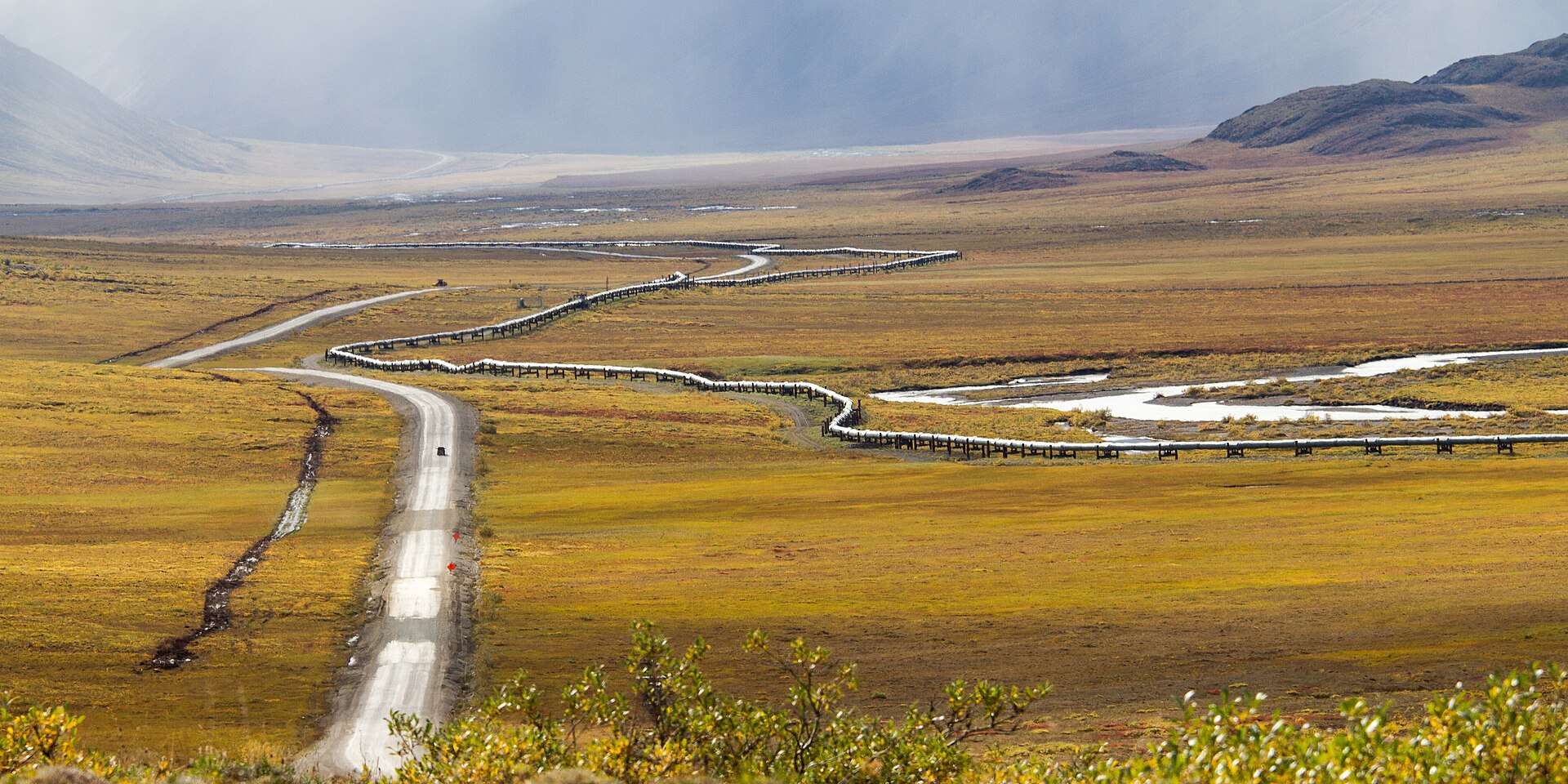
Dalton Highway pipeline corridor
The Dalton Highway corridor — Arctic Fox follows established road right-of-way, not virgin wilderness.
  • Prudhoe Bay (CGF) — North Slope gas intake.
  • → Livengood — 418.2 mi trunk segment down the Dalton/Elliott corridor.
  • → Fox — 65.98 mi stem into the Fairbanks bowl.
  • Interior load centers — Fairbanks, North Pole, Eielson AFB, and secondary gates ≥1 Bcf/yr.
Timeline

Years, not decades

2026
Non-Binding Open Season
Solicit and tally indicative interest (open through Oct 1, 2026). Confirm demand and finalize design capacity.
2027–28
Binding agreements & permitting
Precedent agreements, right-of-way, and regulatory approvals along the established corridor.
2028–29
Procurement & construction
Staged line-pipe procurement at mid-cycle pricing; roadside construction.
~2030
First gas
Target commercial operation — well ahead of any large-diameter interstate option.
Landowner, borough, or agency along the route?
We welcome corridor and permitting questions. Reach the development team →
Cook Inlet & the Railbelt

Cook Inlet's problem isn't heat — it's power

Southcentral Alaska's gas basin can still keep homes warm and refrigerators running for years. What it can no longer do is fuel power generation at Railbelt scale. Arctic Fox fixes that from the north.

  • Cook Inlet gas is fine for distribution. The ~33 Bcf/yr ENSTAR residential/commercial load — heating homes, cooking, refrigeration — is well within what existing reserves, workovers, and storage can deliver for 10–15 more years.
  • Power generation is the load that breaks the basin. Chugach + former ML&P + HEA/MEA burn roughly ~50 Bcf/yr for electricity. That's the demand Cook Inlet can't sustain.
  • The shortfall has arrived. Hilcorp will not renew firm contracts (May 2022 letter); ENSTAR sued Hilcorp (Jan 2025) over “catastrophic” shortage risk; Chugach's firm contract ends March 2028. Utilities are now planning around LNG imports at ~$14–20/Mcf.
  • Arctic Fox is the cheaper fix. Generate power in the Interior on North Slope gas, then send surplus electrons south on the 230-kV Northern Intertie — which AEA states is available to move power to Cook Inlet when the region is short. Cook Inlet keeps its distribution role; the Interior backstops Railbelt power.
Two basins, one grid

The Interior has the gas Cook Inlet lacks. The Railbelt intertie already connects them. Arctic Fox turns North Slope molecules into Railbelt electrons — north to south when it counts.

The numbers

Supply, demand, and the price wedge

Cook Inlet PDP reserves (DNR 2022)
~820 Bcf
Southcentral firm demand (2026)
~102 Bcf/yr
Power-gen share of that demand
~50 Bcf/yr
PDP-only basin life at flat demand
~8 yrs (exhausts ~2030)
LNG-import delivered (Nikiski)
~$14–20/Mcf
Arctic Fox bundled at higher throughput
~$3.71/Mcf @ 30 Bcf/yr
Price wedge vs LNG imports
4–5× cheaper
Northern Intertie (Healy–Fairbanks)
97 mi, 230 kV, energized 2003

Sources: Alaska DNR/DOG 2018 & 2022 Cook Inlet reserves reports; ENSTAR Alaska Utilities Working Group Phase I (2023); ADN / Commonwealth North reporting 2023–2026; Alaska Energy Authority Alaska Intertie fact sheet. The ~$3.71/Mcf figure is the v12 workbook bundled rate at higher throughput (30 Bcf/yr); the ~$5.54/Mcf base case (19 Bcf/yr) is the Economics-tab delivered rate — both far below imported LNG.

Railbelt utility, regulator, or policymaker?
We can walk through the Cook Inlet supply/demand model and the intertie power case. Request the Cook Inlet briefing →
Data Centers & Behind-the-Meter Power

Firm, low-cost gas is the missing input for Interior load growth

Large commercial and industrial loads — data centers, AI/compute, mining, defense, and district energy — need power that is abundant, firm, and price-stable. Naphtha and diesel are none of those. Piped North Slope gas at Fox changes what's possible in the Interior.

  • Behind-the-meter generation. A data-center or industrial campus can site gas-fired generation directly at the load — fed from the Fox delivery point — avoiding transmission constraints and locking in a stable fuel cost.
  • Grid-firming, not grid-straining. New large loads normally stress a constrained grid. Gas-fired on-site power lets them be self-supplied or even net contributors, feeding surplus back through the 230-kV Northern Intertie.
  • Commercial heat + power together. Combined-heat-and-power (CHP) captures generation waste heat for district heating, greenhouses, or process loads — a second bite at the same molecule.
  • Price certainty attracts investment. A cost-of-service gas rate (~$5.54/Mcf base) gives developers a fuel cost they can underwrite for 20 years — something a naphtha/diesel-indexed grid cannot offer.
Why the Interior

Cold climate (free cooling), federal and university anchor tenants, existing fiber and highway corridors, and — with Arctic Fox — firm low-cost gas. The one missing input has been the fuel. This closes it.

Behind-the-meter and CHP configurations are open for discussion with prospective commercial and industrial off-takers. Generation sizing scales with committed load; the pipeline delivery point at Fox is designed to support it.

Data-center, industrial, or large commercial developer?
Let's talk behind-the-meter power and firm gas supply for your load. Start the conversation →
Definitions

Plain-English glossary

Energy and pipeline projects are dense with jargon. Here's what the terms and acronyms on this site actually mean.

Units & measures

Bcf/yr
Billion cubic feet per year — how annual gas volume is measured. Arctic Fox serves ~19 Bcf/yr at base case.
Mcf
One thousand cubic feet of gas — the common billing unit. ("M" is the Roman numeral for thousand.) Delivered Arctic Fox gas is ~$5.54/Mcf.
MMscfd
Million standard cubic feet per day — a daily flow rate.
MMBtu
One million British thermal units — a unit of energy. Comparing fuels per MMBtu is the fair way to compare diesel, propane, and gas, since each holds different energy per gallon or cubic foot.
Dth
Dekatherm — 10 therms, ≈ 1 MMBtu. Used on the interest form to nominate firm capacity.
bpd
Barrels per day — used here for marketable NGLs/propane (~1,802 bpd).

The commodities

Natural gas (CH₄)
Methane — the main product, used for power generation and heating.
NGLs
Natural Gas Liquids — heavier molecules (propane, butane, etc.) separated from the gas stream. A revenue stream and a fuel for communities off the main line.
Propane
An NGL Interior Alaskans already buy for heat and cooking. Arctic Fox can deliver it far cheaper than trucked-in supply.
#1 heating oil / diesel fuel oil
The distillate fuel most Interior homes burn for heat today — expensive on a per-MMBtu basis.
LNG
Liquefied Natural Gas — gas chilled to liquid so it can be trucked. IGU trucks LNG from the North Slope today; a pipe removes the trucking cost.
ANS gas
Alaska North Slope gas — the wet, sweet (low-sulfur) gas feed at Prudhoe Bay.

Engineering

OD
Outside Diameter of the pipe. Arctic Fox primary line is 14″ OD.
API 5L X-65
An industry steel-pipe grade standard (American Petroleum Institute), X-65 denoting the strength. PSL2 is the higher-quality product spec level.
Charpy V-Notch (CVN)
A toughness test ensuring steel won't fracture in extreme cold — critical for −45 °C Brooks Range crossings.
Corrosion allowance
Extra wall thickness added so the pipe lasts its full life despite CO₂ in wet gas.
Line pack
Gas stored within the pipeline itself, providing a short-term supply buffer.
Compression
Adding horsepower at stations to push more gas through the same pipe — how capacity grows without a bigger diameter.

Commercial & regulatory

NBOS
Non-Binding Open Season — the phase (running through Oct 1, 2026) where interested parties signal how much capacity they'd want, with no obligation. See the Get Involved tab.
BOS
Binding Open Season — the later phase where parties sign firm precedent agreements.
COS
Cost of Service — the transparent, regulator-auditable basis for the pipeline tariff.
Offtaker / IP
A party that takes delivered gas or NGLs. "IP" = Interested Party in the NBOS.
Firm service
Guaranteed capacity a customer can count on, versus interruptible service.
FPC
Fairbanks Pipeline Company, Inc. — the developer and sponsor of Arctic Fox.
THM / Livengood
International Tower Hill Mines Ltd. (THM), owner of the Livengood Gold Project — a prospective anchor load along the route.
Hilcorp
The primary North Slope gas counterparty (seller) after BP's 2020 Alaska divestiture.
GVEA / IGU
Golden Valley Electric Association (Fairbanks electric co-op) and Interior Gas Utility (Interior gas distributor) — key Interior load centers.
Northern Intertie
The 97-mile, 230-kV electrical transmission line between Healy and Fairbanks (energized 2003). Part of the Railbelt grid; it can carry Interior-generated power south toward Cook Inlet when the region is short on electricity.
Railbelt
Alaska's interconnected electric grid running from Fairbanks through Anchorage to the Kenai Peninsula.
COPA
Cost of Power Adjustment — the fuel-and-purchased-power component of a GVEA electric bill. It rises with diesel and naphtha prices, which is why Interior electric rates spike when generation burns oil.
PDP
Proven Developed Producing reserves — gas from existing fields and wells. Cook Inlet's ~820 Bcf PDP is the deliverable supply, distinct from larger “undiscovered” resource estimates.
LM6000
A GE aeroderivative gas turbine used for power generation, including at North Pole. The plant was designed to run on gas and to expand; firm gas at Fox lets GVEA convert existing units and double LM6000 capacity as intended.
CHP
Combined heat and power — capturing the waste heat from on-site generation for district heating or process loads, raising total fuel efficiency.
Behind-the-meter
Power generated at the point of use (e.g. a data center or industrial site) rather than delivered over the utility grid — avoids transmission constraints and locks in fuel cost.
FAQ

Straight answers

Is this the big state gas line I've heard about?
No. Arctic Fox is a right-sized, privately financed 14-inch in-state pipeline serving Interior demand — not the large-diameter export-scale interstate project. If a bigger line ever gets built, Arctic Fox still delivers gas to Alaskans in the near term.
Does this need state money?
No state subsidy is required. FPC is privately developing the project with debt and equity financing.
How much cheaper is the gas, really?
Delivered Arctic Fox gas screens at ~$5.54/Mcf (base case) versus the Interior reference of ~$24.76/Mcf — roughly 78% lower on delivered gas. Against imported LNG into Cook Inlet (~$14–20/Mcf), the v12 workbook bundled rate at scale (~$3.71/Mcf @ 30 Bcf/yr) is 4–5× cheaper.
Does this help my electric bill, not just heating?
Yes — that's the core of it. GVEA's rate is ~32.9¢/kWh, driven up by burning a naphtha/diesel mix for power (on the order of 250,000 gal/day annual average, peaking near 500,000 gal/day in deep cold). Fueling generation with gas stabilizes the fuel-cost (COPA) piece of every electric bill and firms the grid.
How does this help Cook Inlet?
Cook Inlet can still heat homes and run refrigeration for years — its problem is power generation (~50 Bcf/yr) draining the basin. Arctic Fox generates power in the Interior on North Slope gas and sends surplus electrons south on the 230-kV Northern Intertie, which AEA states is available to move power to Cook Inlet when the region is short.
Where does the gas come from?
Alaska North Slope gas at Prudhoe Bay, with Hilcorp as the primary counterparty. It's piped 484 miles to the Interior instead of trucked as LNG.
When would gas actually flow?
Target commercial operation is around 2030, following the 2026 open season, binding agreements, permitting, and construction.
How do I express interest or ask a question?
Use the Get Involved / NBOS tab. Tell us your role and level of interest and we'll route you the right materials — from a plain-language brief to the full NBOS package.
Get Involved — Non-Binding Open Season (NBOS)

Tell us who you are and what you're looking for

Arctic Fox is running a Non-Binding Open Season through October 1, 2026. Submitting interest here is non-binding — it signals demand and unlocks the materials matched to your role. There's no obligation.

OFFTAKERS

Utilities, boroughs, industrial and power buyers wanting firm gas ≥0.25 Bcf/yr.

NGL / PROPANE

Distributors and communities wanting propane and NGLs ≥10,000 gal/yr.

INVESTORS

Debt and equity parties seeking the capital structure and offering materials.

STATE / NATIVE / AGENCY

Corridor, permitting, and partnership discussions along the route.

Non-binding. Firm nominations are formalized later on the Attachment A Indicative Interest Form. NBOS window closes 8 a.m. GMT, October 1, 2026.

What's in the NBOS package

  • Project & capacity basis — 484-mile 14″ system, ~19 Bcf/yr base, ~44.1 Bcf/yr ceiling with compression.
  • Character of service — bundled firm gas and NGLs; commodity types, heat content, access points.
  • Terms & rates — cost-of-service transport, commodity, and royalty components (~$5.54/Mcf delivered).
  • Timetable & procedures — how to submit, deadlines, and confidentiality.
  • Attachments — Indicative Interest Form (A), physical gas properties (B), milepost matrix, maps, and standards of conduct.

Serious offtakers, investors, and agencies receive the full package on request. Casual inquiries receive the plain-language brief.